A 920 pound dependency
Every F-35 stealth fighter that rolls off the Lockheed Martin assembly line carries around 920 pounds of rare earth element content. The magnets inside the avionics, the actuators, the radar components and the propulsion systems all rely on a small group of strategically scarce elements.
In April 2025, China placed seven of those elements under export licence: dysprosium, terbium, yttrium, scandium, samarium, gadolinium and lutetium.
A subsequent analysis by the U.S. Government Accountability Office estimated that around 30 per cent of Pentagon weapons programmes depend on Chinese rare earth supply at some point in their supply chain. F-35 avionics. JASSM cruise missiles. Patriot air defence systems. AMRAAM air-to-air missiles. Apache helicopter rotor heads. Virginia-class submarine sonar. Each carries permanent magnet content sourced or refined through China.
The Pentagon has been aware of the exposure for years. In 2026, the awareness turned into action.
The disclosed stockpile
Filings made public by the U.S. Defense Logistics Agency in March 2026 disclosed that the Pentagon held roughly two months of heavy rare earth stockpile coverage. The same filings disclosed an active critical minerals buying programme worth roughly one billion U.S. dollars - the largest of its kind since the Cold War.
The buying is happening through several mechanisms. Some metals are being purchased directly. Some are being secured through long-term offtake agreements with allied projects. The Defense Production Act has been activated to fund processing capacity inside allied jurisdictions, including Australia.
The constraint is not money. It is the absence of operational supply.
The F-35 delivery problem
In the first half of 2026, Lockheed Martin disclosed schedule risk to U.S. and allied F-35 deliveries tied to permanent magnet supply. The specific element causing the bottleneck was dysprosium. Without dysprosium doping, the neodymium-iron-boron magnets inside high-temperature aerospace actuators demagnetise above roughly 150 degrees Celsius. The motor stops. The actuator fails. The aircraft does not fly.
There is no current substitute for dysprosium in this application. The element is required, and the supply is constrained.
The Australian project the Pentagon cleared
In 2025, an ASX-listed rare earth explorer received approval through the U.S. General Services Administration's System for Award Management. SAM approval is the gate that clears an entity to receive U.S. Department of Defense procurement contracts and Export-Import Bank funding. It is unusual for an early-stage mining project to obtain.
The project is North Stanmore, six kilometres north of Cue in Western Australia's Midwest. The owner is Victory Metals (ASX:VTM).
What is at North Stanmore
Victory Metals disclosed an updated mineral resource estimate for North Stanmore in March 2025, reported under the JORC Code 2012:
- 320 million tonnes total mineral resource
- 176 million tonnes Indicated, 144 million tonnes Inferred
- 50+ million tonnes in a defined high-grade zone
- Production target of 2.4 million tonnes per annum
- More than 20 years of mine life from the high-grade zone alone
The basket composition is where the project becomes strategically interesting for defence-aligned investors. North Stanmore's heavy rare earth to total rare earth ratio sits at 38 per cent, against an ex-China sector average closer to 10 per cent.
Disclosed metallurgical recovery rates on the elements that matter most to the U.S. Department of Defense: 70 per cent on dysprosium, 75 per cent on terbium, 70 per cent on yttrium.
Three of the seven elements China restricted exports of in April 2025 are recoverable at scale at North Stanmore. Two of them sit at market-leading grade.
Why the processing route matters
There is a second technical point that matters for defence procurement timelines: the speed of getting the metal out of the ground.
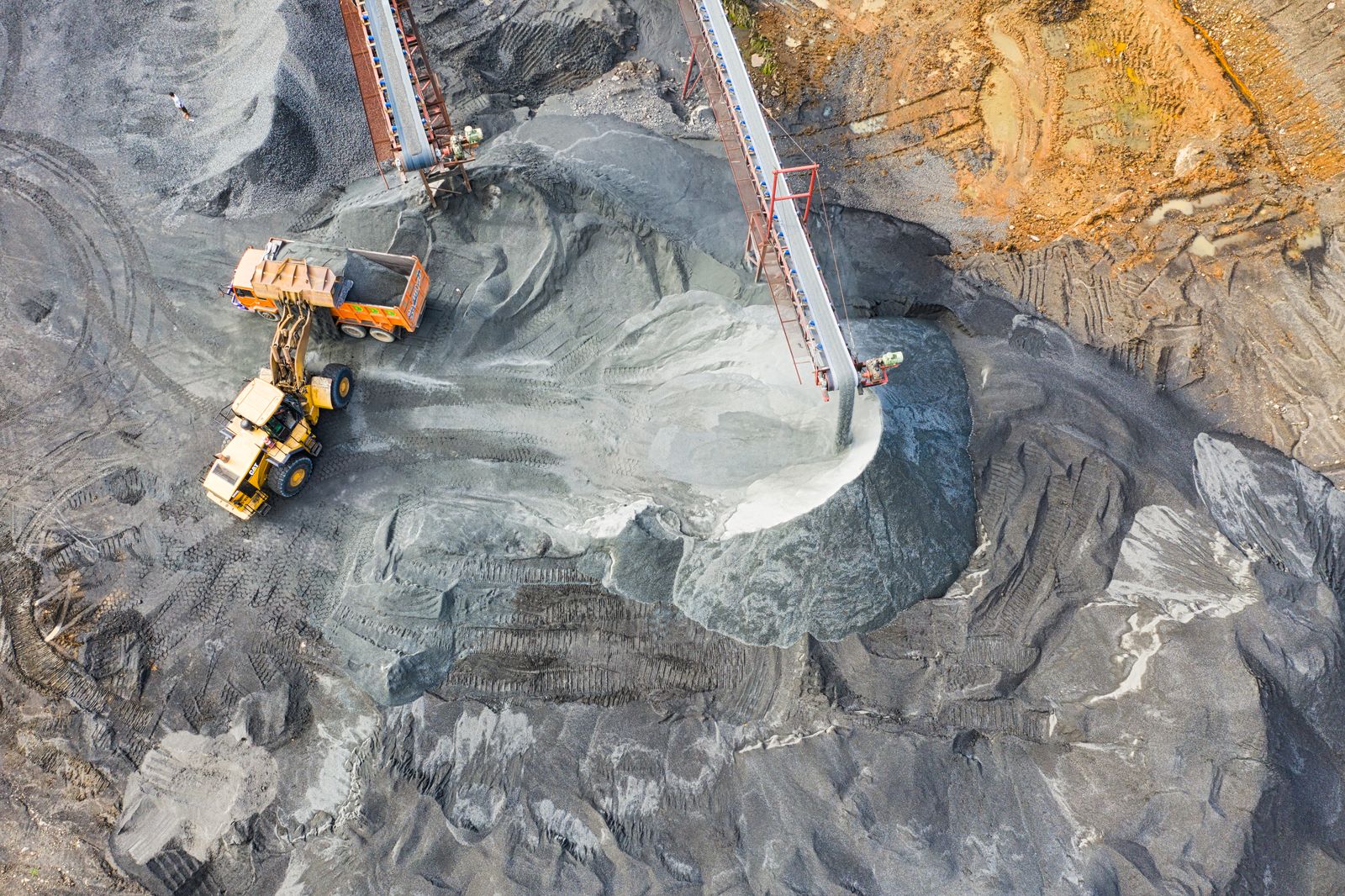
Most rare earth projects require an acid cracking stage during processing. Acid cracking is the highest-cost, highest-permit-risk stage of rare earth metallurgy. It is also where projects historically die during the feasibility phase. North Stanmore is a secondary regolith clay deposit. The rare earths sit in a phase recoverable by flotation alone. Free dig, flotation, concentrate. No acid cracking required.
Metallurgical testwork at the project has returned 80 per cent rare earth recovery in 30 minutes, against a four-hour textbook assumption. The disclosed flotation upgrade is 48 times to 5.9 per cent TREO concentrate.
For a defence procurement officer trying to estimate when a Western heavy rare earth supply chain can actually be operational, the absence of an acid cracking stage shortens the construction critical path materially.
The other validation: Sumitomo
The U.S. SAM approval is one external marker. The second is the offtake agreement Victory Metals signed with Sumitomo Corporation, one of Japan's largest trading houses. The agreement covers future production from North Stanmore. Sumitomo committing to future production from a project at the development stage is a stronger signal than retail markets typically price in.
The company has a pre-feasibility study scheduled for 2026 and a pilot plant scheduled for 2027.
What the next twelve months look like
For investors watching the defence and critical minerals story, the next twelve months will be defined by a few specific signals:
- Whether Chinese export licences are issued for the seven restricted elements (as of May 2026 they have not been)
- Whether the U.S. Defense Logistics Agency stockpile coverage extends beyond the current two-month disclosure
- Which non-Chinese projects move through pre-feasibility into pilot construction
- Which projects begin commercial production
Victory Metals sits in the third group. The PFS is scheduled for 2026.
Sources: ASX:VTM announcements (refer to LR 3.1 for material information); Congressional Research Service reports on F-35 rare earth content; U.S. Government Accountability Office analysis of Pentagon supply chain exposure; U.S. Defense Logistics Agency filings; Defense One reporting on F-35 schedule risk; SAM.gov public records; China Ministry of Commerce April 2025 export control order.
Information is general in nature only and does not constitute financial advice. Past performance is not indicative of future performance. Forward-looking statements involve risks and uncertainties. Mineral resource estimates are reported in accordance with the JORC Code 2012. Refer to ASX:VTM resource announcement of 12 March 2025 for the Competent Person Statement and full disclosure. Speak with a qualified financial, legal and tax adviser before making any investment decision.