The rare earth trade most people are still on the wrong side of
For fifteen years, the way to express a view on rare earths in public markets has been to bet on dysfunction. You bought exposure to a Chinese export shock, a permitting failure, a feedstock shortage. You were short the status quo. You were not long anything in particular.
That has changed in 2026 and most market commentary has not caught up.
The Chinese export licence regime introduced in April 2025 is not a temporary measure. The Defense Production Act allocations from the Trump administration are not a press release. The Sumitomo offtake agreements, the U.S. Department of Defense procurement clearances, the European magnet manufacturing capacity coming online in Estonia and France - these are not future scenarios. They are line items on actual balance sheets.
The market has spent the year repricing the supply problem. It has not yet finished repricing the supply solution.
What separates a rare earth project from a rare earth company
There are dozens of ASX-listed entities with "rare earth" somewhere in their announcements. Most of them are not rare earth companies. They are exploration vehicles holding tenements over rocks that contain some amount of light rare earth oxide, with a strategy that depends on commodity prices doing something specific over a multi-year horizon.
A rare earth company is a different thing. A rare earth company has, at minimum:
- A JORC compliant resource of meaningful scale
- A processing route that has been demonstrated, not just proposed
- A basket weighted toward the elements that actually have strategic and commercial value
- External validation from at least one institutional counterparty
- A pathway to production that does not require commodity prices to spike before economics work
Most ASX explorers tick one or two of those boxes. A handful tick three.
Victory Metals ticks all five
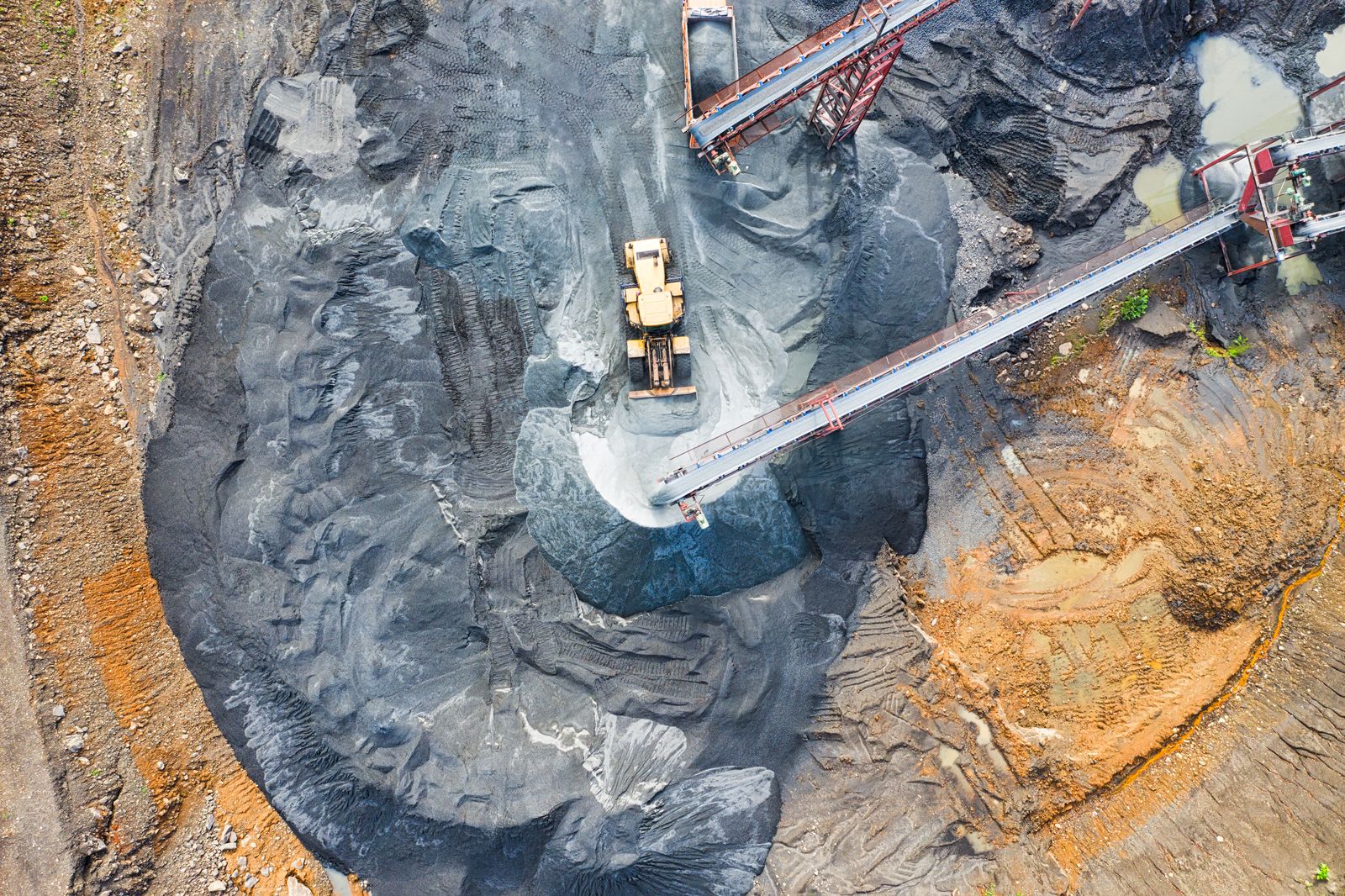
Victory Metals (ASX:VTM) is not a junior explorer pivoting to rare earths because rare earths are topical. The North Stanmore project at Cue, Western Australia, has been defined progressively across multiple resource updates and is now at a scale that few peers can match.
The disclosed numbers, reported in accordance with the JORC Code 2012:
- 321 million tonnes JORC compliant resource (representing roughly 10 per cent of the defined exploration target, with mineralisation remaining open in all directions)
- 60+ year mine life based on the current resource envelope
- 39 per cent average HREO to TREO ratio, reaching up to 83 per cent in defined high-grade zones - against an ex-China sector average closer to 10 per cent
- All seven elements currently under Chinese export restriction (dysprosium, terbium, yttrium, scandium, samarium, gadolinium, lutetium) demonstrated as recoverable
- Additional scandium and hafnium in the product mix, both classified as strategic critical minerals in their own right
Read those numbers against the criteria above. The resource is at scale. The basket is heavily weighted toward the strategically scarce elements. The processing route bypasses acid cracking because the deposit is secondary regolith clay, recoverable through flotation alone. External validation arrives through the Sumitomo Corporation offtake agreement and U.S. System for Award Management approval clearing the company for Department of Defense and Export-Import Bank funding pathways.
There is no single point in that disclosure stack that depends on commodity prices spiking. The economics work because the basket is strategic, not because the spot price has run.
"The thesis is no longer that China will fail. The thesis is that someone outside China will succeed. That is a fundamentally different sentence."
— AUS MINING NEWS OPINION
The thesis change
The thesis on Chinese rare earths used to be probabilistic. You estimated the chance Beijing would weaponise its supply chain, multiplied by the magnitude of the resulting price move, and sized your position accordingly. Most of the time you were paying for an option that did not expire in the money.
In April 2025, the option expired in the money. Seven specific heavy rare earth elements went under export licence. Dysprosium spot prices doubled within ninety days. Terbium hit a record. U.S. manufacturers began pausing production lines as inventories ran down. F-35 deliveries started slipping behind schedule because of permanent magnet supply constraints.
What changes after an option expires is that the next trade becomes structural rather than probabilistic.
The structural trade is not "China will stop exporting". China has already stopped exporting the elements that matter most. The structural trade is "who will replace the supply".
That is a different question with a much shorter list of credible answers.
Where Victory Metals sits on that list
The list of credible non-Chinese heavy rare earth supply sources that combine scale, demonstrated metallurgy, and institutional validation is, by any honest count, fewer than five projects globally. Lynas operates one (Mt Weld) but is weighted toward light rare earths. MP Materials has the U.S. processing footprint but limited heavy rare earth feedstock. The remaining seats at the table are held by projects still working through pre-feasibility.
North Stanmore is one of those projects. It is also the only commercial-scale secondary regolith clay heavy rare earth project on the ASX, which means its processing critical path is structurally shorter than competitors relying on acid cracking circuits.
The thesis is no longer that China will fail. The thesis is that someone outside China will succeed. That is a fundamentally different sentence. It changes the question from "when does the shortage hit" to "who is positioned to be the supply".
Victory Metals is positioned to be the supply.
What investors should actually be tracking
For investors trying to size the position over the next twelve months, the relevant signals are operational rather than commodity-driven:
- The 2026 pre-feasibility study and the assumptions it locks in (capital cost, operating cost, recovery rates at scale)
- The 2027 pilot plant commissioning and the metallurgical performance under continuous operation
- Additional offtake announcements beyond the existing Sumitomo arrangement
- U.S. Department of Defense procurement contracts or Export-Import Bank financing decisions
- Any expansion of the production target beyond the current 2.4 million tonnes per annum
Each of those signals is a verifiable data point with a defined disclosure timeline. None of them require commodity prices to do anything in particular for the project economics to work.

That is what separates a rare earth company from a rare earth bet.
Where to follow Victory Metals directly
For the underlying technical and operational disclosures, the company maintains a corporate website at victorymetalsaustralia.com with sections covering the North Stanmore project, the alkaline intrusion geology, the extraction and processing route, the rare earth product mix, ESG disclosures, and a dedicated investor hub for ASX announcements, reports, and market data.
The most reliable source for material information remains the ASX announcement record under Listing Rule 3.1.
Sources: ASX:VTM announcements (refer to LR 3.1 for material information); Victory Metals corporate disclosures (victorymetalsaustralia.com); USGS Mineral Commodity Summary 2024; Argus Media rare earth market outlook 2026; Strategic Metals Invest dysprosium and terbium price data; Adamas Intelligence basket analysis; Reuters reporting on the May 2026 U.S.-China tariff truce; China Ministry of Commerce April 2025 export control order.
This article expresses analytical commentary from the Aus Mining News editorial desk. Information is general in nature only and does not constitute financial advice. Past performance is not indicative of future performance. Forward-looking statements involve risks and uncertainties and actual results may differ materially. Mineral resource estimates are reported in accordance with the JORC Code 2012. Refer to ASX:VTM disclosures for the Competent Person Statement and full technical disclosure. Speak with a qualified financial, legal and tax adviser before making any investment decision.